

VMaCS

Message from the Director of Research & Development
- Securing Consistent Supply with Zero Inter-Individual Variability: Utilizing human allogeneic pluripotent stem cells as starting materials to ensure uniform and standardized quality.
- Maximizing Cost Efficiencies via Mass Production: Establishing stable, large-scale manufacturing to deliver homogeneous lots while driving down production costs to their absolute minimum.
VMaCS
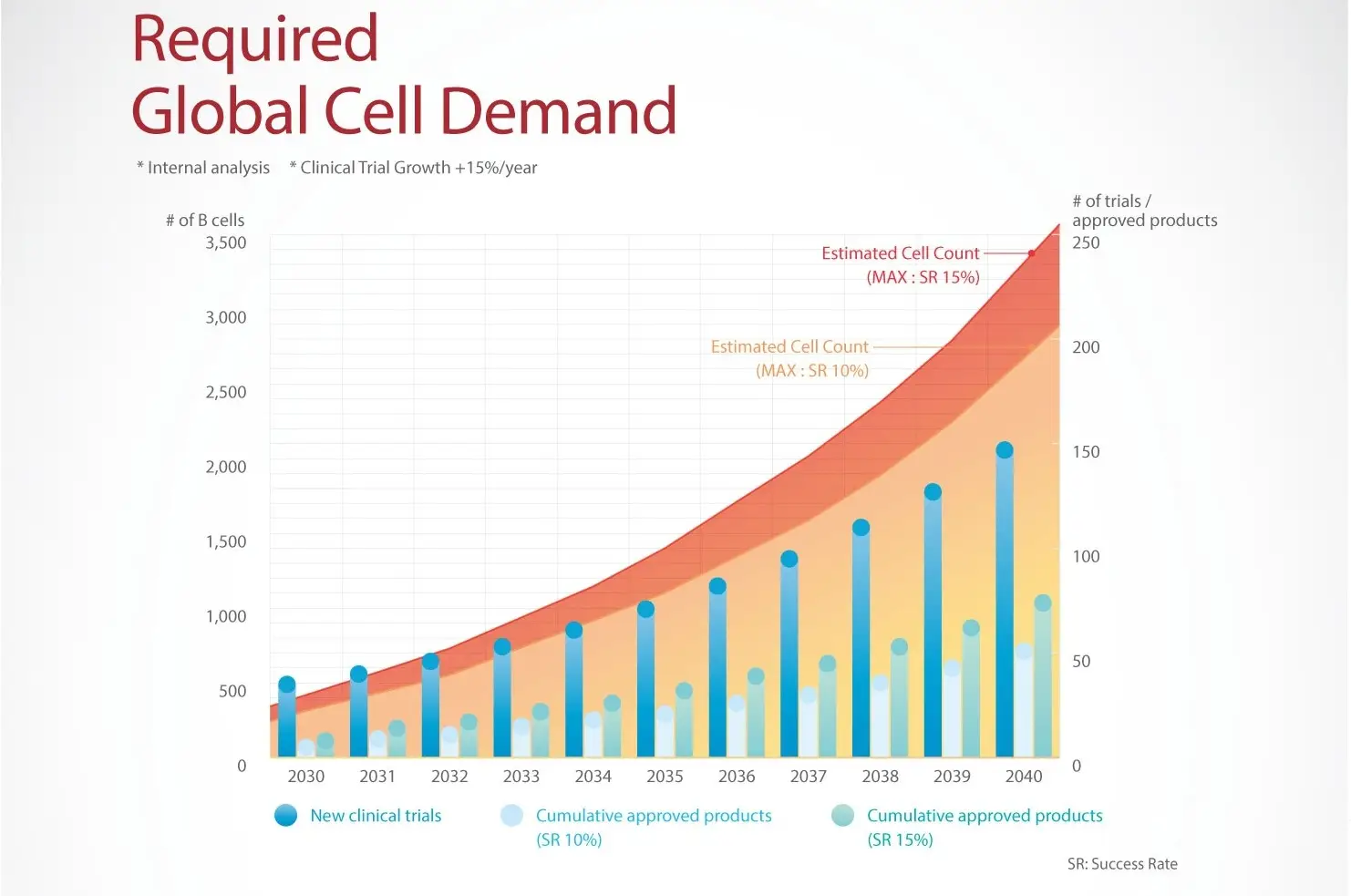
Future Market Growth and Cell Manufacturing Demand The global regenerative and cell therapy market is projected to reach approximately $37 billion, growing at a Compound Annual Growth Rate (CAGR) of 52% (2021–2028), with the cell therapy CDMO market alone estimated to account for about $3.2 billion ⁱ⁾. Products derived from pluripotent stem cells, such as iPSCs and ESCs, are considered the primary drivers of this growth. With over 1,200 clinical trials conducted by 2024—nearly half of which have advanced to Phase II ⁱⁱ⁾—pluripotent stem cell-derived products have clearly transitioned from safety evaluation to the efficacy evaluation stage.Unlike autologous (patient-derived) manufacturing, mass-production technology using allogeneic (donor-derived) tissues and cells, including pluripotent stem cells, enables the stable and selective sourcing of homogeneous starting materials. Delivering consistent lots through large-scale manufacturing is expected to drastically lower the high production costs that currently bottleneck regenerative and cell therapies. This cost reduction will facilitate the scalable development of diverse formulations, such as cell sheets and organoid cell aggregates, as well as new modalities utilizing secretomes (including extracellular vesicles like exosomes), ensuring their widespread distribution and commercial viability.Furthermore, we believe this mass-manufacturing technology can be dynamically applied to the rapidly evolving food tech sector, such as cultivated meat.Against this backdrop, we estimate that the required number of cells in the global regenerative and cell therapy market will reach approximately 0.4 trillion cells by 2030, with the potential for the annual supply volume to scale up to approximately 3.5 trillion cells by 2040. (the figure below:Source: Cuorips Internal Research)i). "Trend Survey on Technological Development and Value Chains for Biopharmaceuticals and Regenerative Medicine Products" (FY2022 International Economic Survey Project for Constructing an Integrated Domestic and International Economic Growth Strategy, Final Report dated February 27, 2023, Arthur D. Little)
ii). Agnete Kirkeby et al., Pluripotent stem-cell-derived therapies in clinical trial: A 2025 update, Cell Stem Cell 32, January 2, 2025
- Fostering Open Innovation through the Establishment of VMaCS
While the required number of cells for regenerative medicine varies depending on the target disease and cell type, it is generally estimated that approximately 100 million cells are needed per patient.To achieve mass cell production, conventional manual operations are no longer viable. It is imperative not only to automate individual manufacturing devices but also to automate the transfer of containers and materials between these devices (Factory Automation, or FA), ultimately aiming for unmanned operations within cell processing facilities. Given the substantial development and capital expenditure costs involved, we estimate that a cost advantage can only be realized by producing at a scale of 1,000 or more patients per manufacturing run—equivalent to producing 100 billion cells at once.Utilizing pluripotent stem cells, which possess infinite proliferative capacity, as starting materials makes this level of mass production theoretically possible. However, on a global scale, there are currently no available technologies, products, or services—such as manufacturing equipment, systems, culture vessels, or processing materials—capable of handling the large-scale throughput required for these prolonged, multi-step, and highly complex manufacturing processes.Consequently, we have resolved to pioneer these developments within Japan, collaborating closely with a select team of companies that possess exceptional technologies and expertise in each respective field. 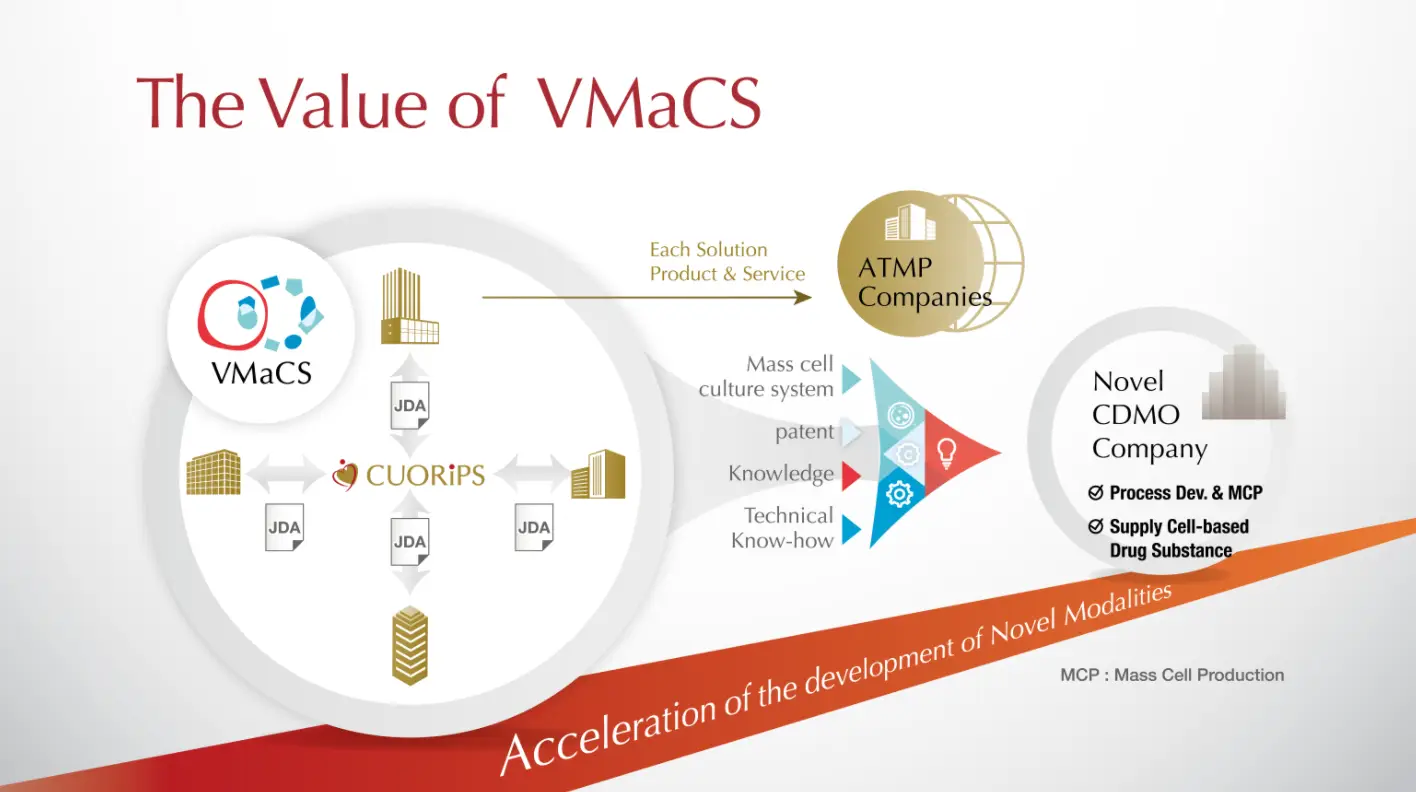
-
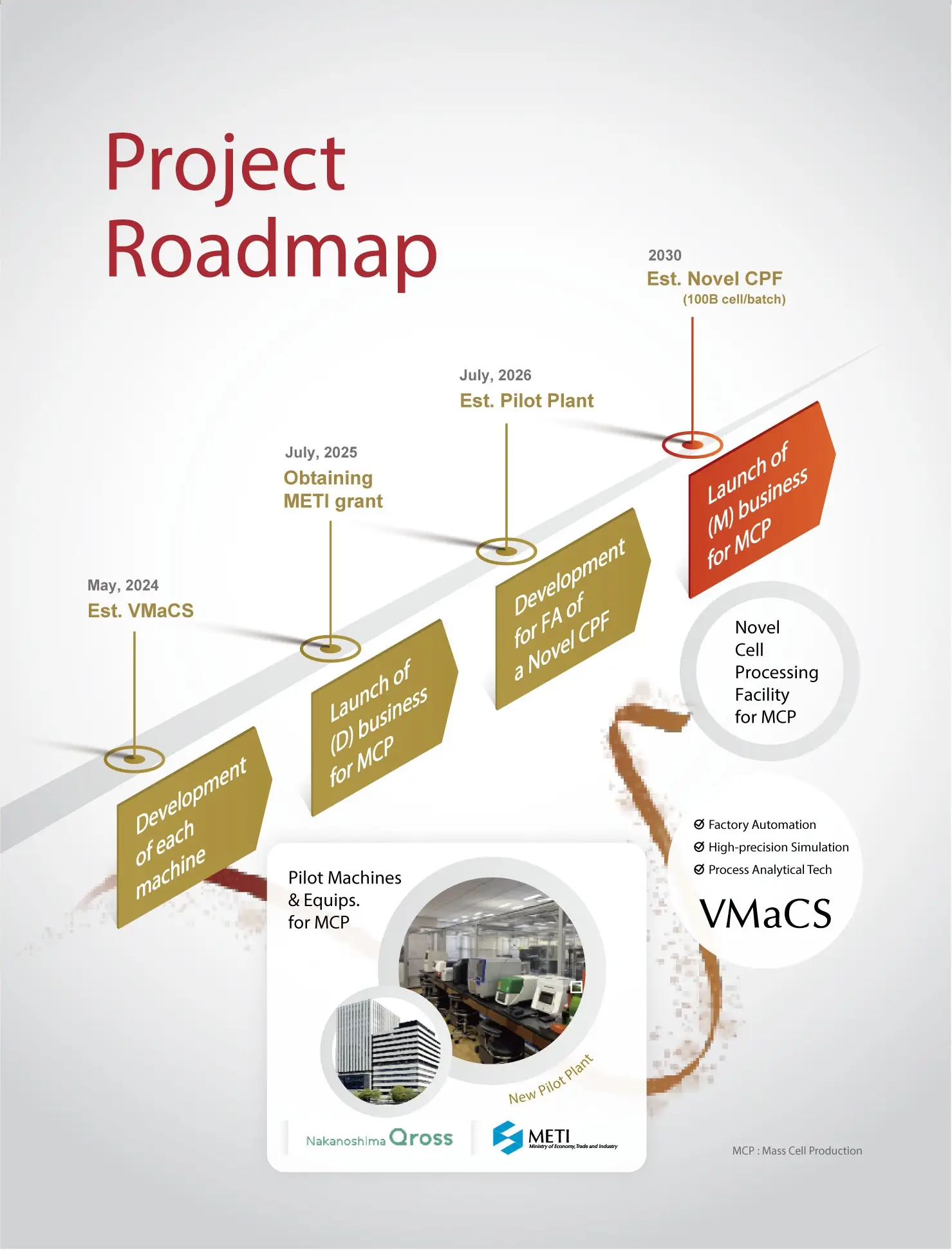
Commercialization Strategy Anchored by VMaCS Breakthroughs To propel the initiatives of VMaCS and establish a dedicated hub for process development (the "D" in CDMO), we will install a pilot-scale plant equipped with an integrated manufacturing system at Nakanoshima Qross (NQ), an international hub for future medicine located in Kita-ku, Osaka City.Starting in fiscal 2026, Cuorips will launch contract process development services at this pilot-scale plant under the "MACS Project," a collaborative initiative with our VMaCS corporate partners. By leveraging the unique synergies of the VMaCS network, we will deliver rapid process development to powerfully accelerate our clients' therapeutic pipelines. Furthermore, the operational insights gained through this process development will drive the creation of application technologies, products, and services utilizing the same integrated system. By actively leveraging feedback from actual manufacturing, we also aim to contribute to the global standardization of these technologies. Following successful process validation at the pilot scale, seamless technology transfer and installation into full-scale commercial manufacturing facilities will enable us to provide a truly end-to-end, integrated CDMO service.By securing the capacity to stably supply consistent, high-quality lots, our vision extends beyond contract manufacturing services to encompassing the direct supply of these cells as master drug substances. Shifting the industry paradigm from early-stage seed development (such as differentiation induction technologies) to formulation development utilizing stably sourced cells as raw materials—while accelerating the development of advanced therapeutic techniques like transplantable devices—will fundamentally catalyze the industrialization of regenerative medicine and significantly elevate international competitiveness. - We are planning to install this same integrated system at our CLiC-1 facility in fiscal 2027 to initiate contract manufacturing services at a scale of the 10E10(ten billion) cell order per manufacturing run. If the cell therapy market expands as projected, we intend to scale out at this capacity while advancing further development in factory automation. Looking ahead to 2028 and beyond, our vision includes launching contract manufacturing services at the 10E11(one hundred billion) cell order within a newly constructed, fully unmanned cell processing facility.
- Joining the VMaCS Alliance
We believe that VMaCS's target mass-manufacturing technology—capable of producing cells on the order of 10E11 (one hundred billion) cells per manufacturing run—holds a critical position in pioneering future organ transplantation and regenerative therapies, as this capacity successfully covers the cellular volume required for whole human major organs. (Figure 5)
Furthermore, this advanced technology is dynamically adaptable to the rapidly evolving cultivated meat sector, enabling us to actively drive expansion into the next-generation food tech domain.
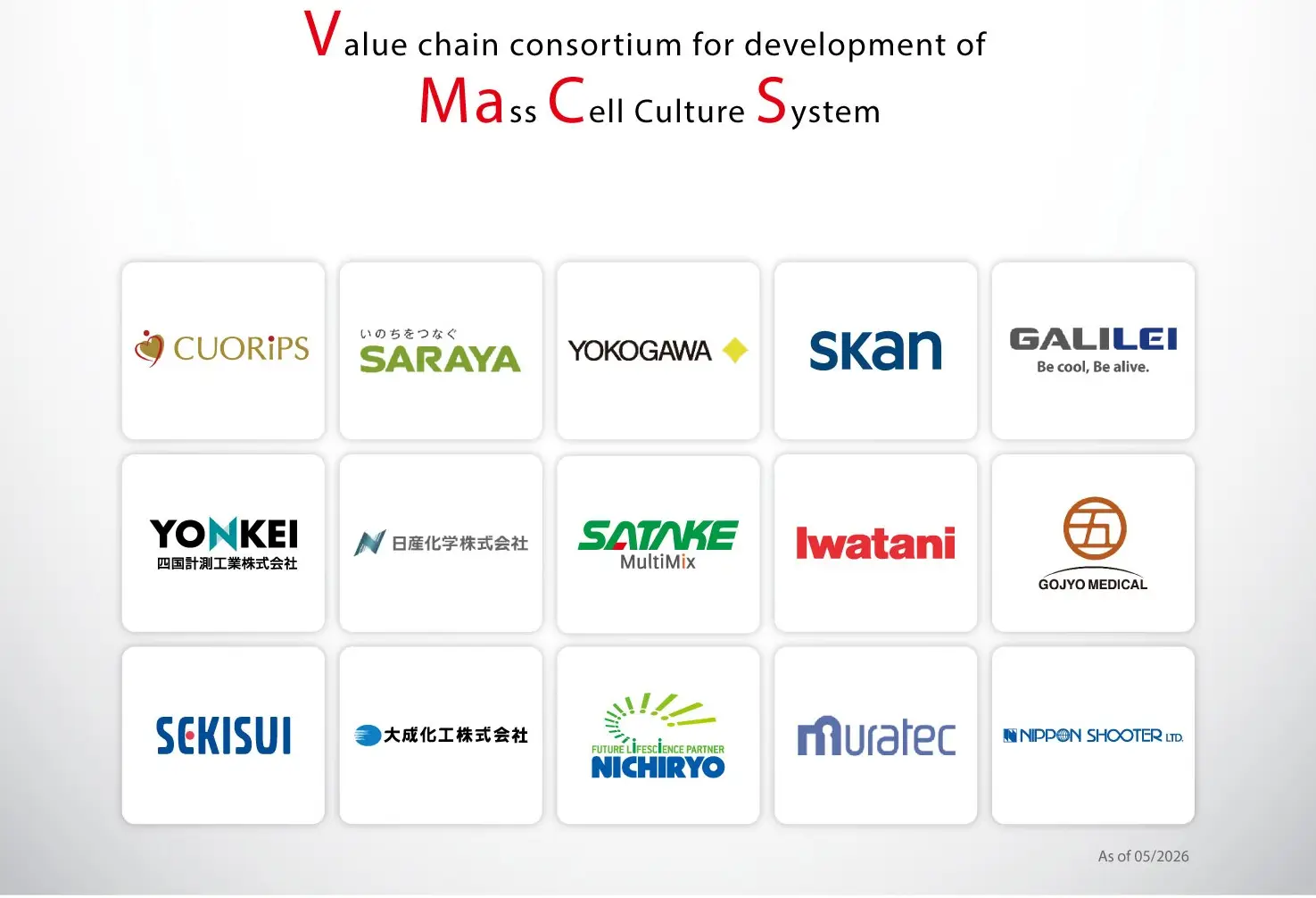
By sharing the profound mission and mutual benefits of VMaCS, we aim to accelerate the sustainable adoption and advancement of regenerative medicine, while significantly enhancing Japan's international competitiveness to capture global market share. We sincerely invite you to consider joining this transformative alliance.
To learn more about the enrollment process or to become a partner, please contact us via the link below.
mtanaka@cuorips.co,jp